
The Effect of Sevoflurane on Neurotransmission
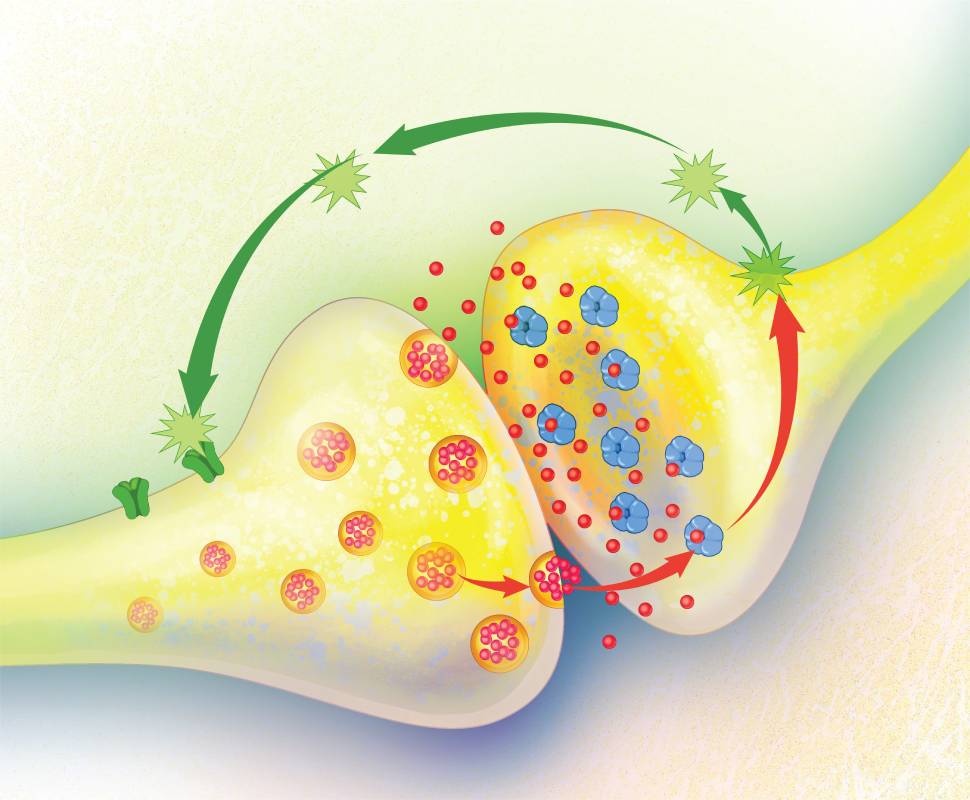
General anesthetics, such as sevoflurane, alter neuronal communication by modulating synaptic receptors, ion channels, and signaling pathways, leading to widespread changes in neurotransmission. Sevoflurane is one of the most widely employed anesthetics in medical practice, yet its precise mechanisms are still not fully understood. This anesthetic has been shown to inhibit neuronal voltage-gated potassium and sodium channels and potentiate two-pore domain potassium channels. It enhances inhibitory receptors like GABA and glycine while down-regulating excitatory receptors like NMDA and cholinergic receptors.
Although it has been traditionally overlooked in anesthesia research, the cerebellum has recently emerged as a significant site of action, with evidence showing that anesthetics suppress cerebellar activity and disrupt connectivity with cortical regions.1 Given the cerebellum’s well-characterized circuitry and strong links to both cognitive and sensorimotor functions, it provides an ideal model to study sevoflurane’s effects on neurotransmission.2
In a 2021 pre-clinical study, researchers experimented on the parasagittal cerebellar slices of 28 postnatal rats. They performed patch-clamp recordings after perfusion with sevoflurane to measure how the anesthetic affected synaptic currents. Excitatory post-synaptic currents (EPSCs) were recorded from cerebellar granule cells (GrCs) clamped at 70 mV. Sevoflurane did not significantly alter AMPA-mediated EPSC amplitudes but strongly reduced NMDA receptor-mediated currents in GrCs, confirming NMDA channels as a primary target. Under conditions that isolated NMDA currents, sevoflurane led to diminished temporal summation and reduced excitatory drive. Sevoflurane also decreased excitatory post-synaptic potential (EPSP) peak amplitude and area. Analysis of input-output relationships revealed sevoflurane markedly reduced action potential spike probability, total spike count, and firing frequency. This effect was consistent with both the suppression of NMDA currents and the enhancement of GABAergic inhibition.3
Sevoflurane strongly potentiated GABAergic neurotransmission in GrCs. When Golgi cell axons were stimulated, both spontaneous and evoked inhibitory post-synaptic currents (sIPSCs and eIPSCs) were reliably recorded and pharmacologically isolated. In contrast with the effect produced by desflurane,4 sevoflurane altered sIPSCs by increasing frequency and nearly doubling peak amplitude, while prolonging their decay kinetics without changes in rise time. Evoked IPSCs were similarly enhanced, with significantly greater amplitude and slower decay, further indicating strengthened inhibitory signaling. Sevoflurane also reduced the paired-pulse ratio of eIPSCs, suggesting a presynaptic increase in vesicle release probability. Together, these findings demonstrate that sevoflurane amplifies GABAergic neurotransmission by boosting both presynaptic release and postsynaptic receptor activity.3
Sevoflurane exerts its anesthetic effects by shifting the balance of neurotransmission toward inhibition. While it modestly impacts excitatory AMPA-mediated signaling, it strongly suppresses NMDA receptor activity, reducing temporal summation and excitatory drive. At the same time, it potentiates GABAergic neurotransmission by enhancing both presynaptic release and postsynaptic receptor responses, leading to prolonged and amplified inhibitory currents. This dual action (i.e., attenuating excitatory signaling while simultaneously strengthening inhibitory mechanisms) provides a mechanistic basis for sevoflurane’s ability to dampen neuronal activity and disrupt cerebellar connectivity. These findings highlight the cerebellum as a key target for understanding how halogenated anesthetics like sevoflurane alter network communication and contribute to the induction of unconsciousness.
References
- Ordek G., Groth J.D., Sahin M., Differential Effects of Ketamine/Xylazine Anesthesia on the Cerebral and Cerebellar Cortical Activities in the Rat. Journal of Neurophysiology. 2013;109(5):1435-1443. https://doi.org/10.1152/jn.00455.2012
- D’Angelo E., Casali S., Seeking a Unified Framework for Cerebellar Function and Dysfunction: From Circuit Operations to Cognition. Frontiers in Neural Circuits. 2013;6. https://doi.org/10.3389/fncir.2012.00116
- Mapelli J., Gandolfi D., Giuliani E., et al. The Effect of Desflurane on Neuronal Communication at a Central Synapse. PLOS ONE. 2015;10(4):e0123534. https://doi.org/10.1371/journal.pone.0123534
- Mapelli J., Gandolfi D., Giuliani E., et al. The Effect of the General Anesthetic Sevoflurane on Neurotransmission: An Experimental and Computational Study. Scientific Reports. 2021;11(1):4335. https://doi.org/10.1038/s41598-021-83714-y